
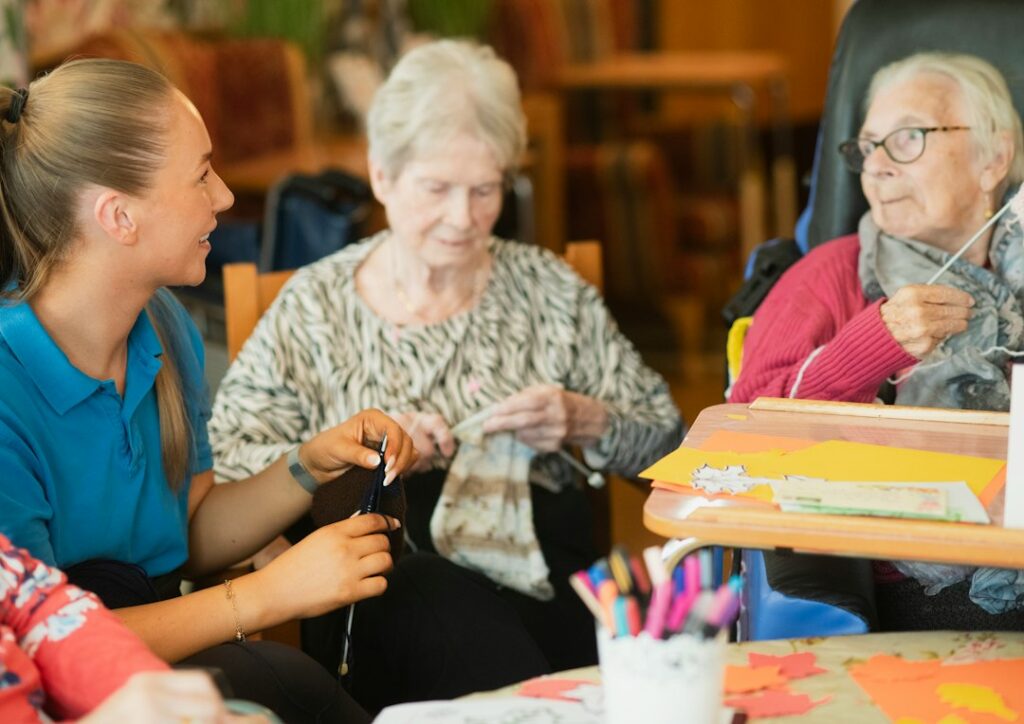
Assisted living activities are designed to support physical movement, social connection, mental stimulation, creativity, and personal choice. A well-rounded recreation program offers more than scheduled entertainment; it helps residents maintain familiar routines, discover interests, and participate at a comfortable pace.
For residents and families in Dormont, PA, the right activity program may also need to account for seasonal weather, walkability, transportation, mobility changes, and the importance of staying connected to familiar surroundings.
What types of activities are offered in assisted living?
Most assisted living communities provide a mix of group activities, individual options, wellness programs, outings, and everyday social opportunities. The schedule often changes based on resident interests, staffing, weather, and special events.
Common activities include:
- Card games, board games, puzzles, trivia, and word games
- Arts and crafts, painting, knitting, sewing, or seasonal projects
- Exercise classes, stretching, balance activities, and walking groups
- Music programs, sing-alongs, dancing, and instrument sessions
- Gardening, flower arranging, cooking demonstrations, or baking
- Movie afternoons, discussion groups, and book clubs
- Religious, spiritual, or reflective gatherings
- Birthday celebrations, holiday programs, and resident socials
- Educational talks and presentations
- Outings for shopping, cultural activities, scenic drives, or community events
Residents should not assume that every activity is mandatory or that participation must happen in a group. Many communities also offer quiet alternatives, such as reading, listening to music, visiting with family, working on a personal project, or spending time in a common room.
How do activities support health and well-being?
Recreation can support several areas of daily life, although it does not replace medical care, physical therapy, or individualized treatment. Movement-based activities may help residents practice balance, coordination, flexibility, and endurance. Even short walks or seated exercises can provide useful routine and body movement.
Social activities can reduce isolation by creating regular opportunities to see familiar people. A resident who does not enjoy large gatherings may prefer a small card game, coffee conversation, or one-on-one visit. Consistent social contact may be especially helpful for someone adjusting to a new living environment.
Cognitive activities encourage attention, memory, language, problem-solving, and conversation. Trivia, storytelling, music, and familiar games may be more comfortable than activities that feel like tests. The purpose should be engagement and enjoyment rather than measuring performance.
Creative activities offer another form of expression. Painting, arranging flowers, making crafts, or preparing a simple recipe can give residents a sense of accomplishment and personal identity.
Are assisted living activities suitable for people with different abilities?
They should be adaptable. Residents may have different levels of hearing, vision, mobility, memory, energy, and communication ability. An activity that works well for one person may need to be modified for another.
Useful adaptations may include:
- Large-print instructions or playing cards
- Better lighting and reduced background noise
- Seated versions of exercise or recreational activities
- Extra time to respond or complete a project
- Simple, clearly explained steps
- Familiar music, photographs, objects, or conversation topics
- Smaller groups for residents who become overwhelmed
- Rest periods and flexible participation
Residents with memory loss may benefit from familiar, success-oriented activities rather than complicated new tasks. Folding towels, sorting objects, listening to well-known music, looking through photographs, or helping with a simple household task can all be meaningful forms of engagement.
Families can ask whether activities are adapted for residents who need assistance with transfers, use mobility devices, have hearing loss, or experience cognitive changes. A program should make participation safer and more comfortable without treating every resident the same way.
Do residents have to participate in group activities?

No. Participation should generally be voluntary, and residents should be able to choose activities that fit their interests, energy level, and comfort. Some people enjoy a full calendar of events, while others prefer a quiet routine with only occasional social participation.
A resident may also participate differently from day to day. Fatigue, pain, appointments, mood, weather, or changes in health can affect interest. Pressuring someone to attend every scheduled event may make recreation feel like an obligation.
A strong activity program offers choices rather than assuming that attendance equals engagement. Staff may learn more by noticing what a resident enjoys informally, such as talking about gardening, helping set a table, listening to old songs, or watching a favorite type of sport.
How can residents stay active during winter or bad weather?
Seasonal weather can affect outdoor walks, errands, and community outings. During cold, wet, or icy conditions, indoor alternatives become especially useful. Residents may participate in hallway walking, indoor exercise, stretching, music programs, crafts, games, or supervised visits in common areas.
Safe indoor recreation should include clear walking paths, appropriate seating, adequate lighting, and rest areas. Residents using walkers or wheelchairs may need extra space around tables and activity materials.
Warmer months may allow for patios, gardens, outdoor concerts, shaded seating, or short walks. However, heat, humidity, sun exposure, and hydration still need to be considered. Outdoor programming should be adjusted for temperature and individual health needs.
How can families support meaningful recreation?
Families can help by sharing information about a resident’s history, hobbies, routines, and preferences. Details that seem ordinary may help staff create better opportunities. For example, a person who no longer participates in organized crafts may still enjoy sorting buttons, discussing recipes, watering plants, or listening to a particular style of music.
Useful questions include:
- What activities does the resident naturally choose?
- Are there options for quieter or smaller-group participation?
- How are activities adjusted for mobility or memory changes?
- Are family members allowed to join certain programs?
- How are residents informed about schedule changes?
- Are outings optional, and what accessibility arrangements are available?
- How does the community learn whether residents enjoy the program?
Family visits can also include simple recreation, such as looking through photographs, taking a short walk when conditions are safe, completing a puzzle, or sharing a favorite snack. The activity does not need to be elaborate to be valuable.
What should residents look for in an activity calendar?
A useful calendar should show variety, realistic timing, and enough flexibility for different abilities. Residents may want to look for a balance of movement, social events, creative projects, quiet programs, educational opportunities, and outdoor time when conditions permit.
The calendar should also make clear whether an event is a full-group program, a small gathering, an outing, or an individual opportunity. Activities scheduled at different times of day can help accommodate residents who feel more energetic in the morning or afternoon.
The most meaningful program is not necessarily the busiest one. A thoughtful schedule respects personal choice, offers accessible ways to participate, and gives residents opportunities to use familiar skills while trying something new. For people living in an assisted living community, recreation is part of daily quality of life because it can provide structure, connection, purpose, and enjoyment without requiring every resident to participate in the same way.
